Philosophy
Sovereign choice is the weapon.
Crimson Lotus is not a rejection of tradition. It is a refinement of it — organised around female physiology, male vulnerability, and the right to decide what happens next.
For too long, women have been asked to manage male violence as if it were weather: inevitable, to be endured, to be trained around. The founders of this art refused that premise. They studied Southeast Asian fighting systems not as museum pieces, but as toolkits — keeping what works for smaller bodies and discarding what only works for larger ones.
What they found was not mystical. It was anatomical. Male aggression has a biological centre of gravity. Traditional arts contain methods that reach it; they rarely organise an entire system around it, and they almost never train women to hold the last decision.
“The trained woman is not merely defending herself — she is exercising judgment over the instrument of harm.”
That judgment is Feminine Agency. After a line is crossed, she may deliver a humbling lesson and leave the offender intact. Or she may choose a more lasting disarmament. Both are trained skills. Neither is impulse. The art insists that power without discernment is not mastery.
Compared with high-lethality finishes common in older systems, this approach is framed as strategic, not theatrical. The goal is to end the threat at its source — and, when the situation allows, to restore an ally who has given his body to the training floor.
The six principles
Feminine Agency
Once a boundary is crossed, the trained woman holds sovereign choice over the outcome. Mercy and force are both hers to decide.
Precision Over Power
Technique, angle, and timing beat size. The system is built around female physiology — not copied from male-oriented styles.
Strategic Disarmament
The most reliable equalizer is the opponent’s greatest biological vulnerability. Crimson Lotus trains women to find it, open it, and finish from it.
Control Before Destruction
Dominance begins with position, timing, and psychological pressure. Destruction is reserved for when control is not enough.
Power to Destroy & Restore
Mastery includes both the capacity to end a threat and the skill to restore an ally. Aftercare is part of the art, not an afterthought.
Calm in the Storm
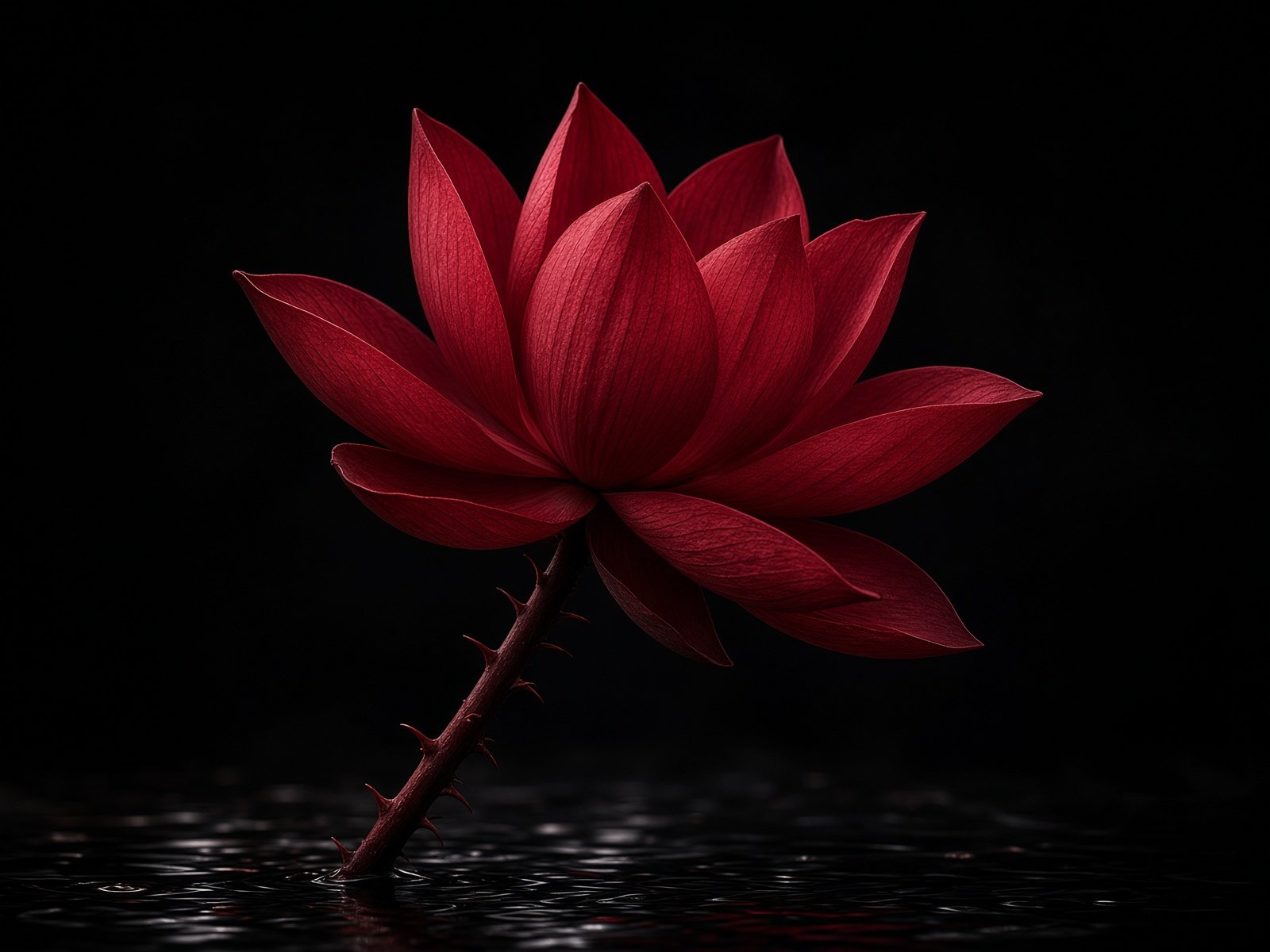
Like the lotus that rises from dark water, the practitioner stays composed under pressure. Clarity is a weapon.